Imagine waking up one morning to discover that a company has marked land in your community for mining. Within months, heavy machinery arrives. Trees disappear. Dust fills the air. Farmland becomes less productive. Streams become polluted or dry up. Community members begin to worry about their health, livelihoods, and future. The company’s community development agreement projects do not adequately address the impacts that the community now suffers.
For many communities, these questions arise only after the impacts become visible. But what if there was a process designed to identify and address these risks before a project begins?
That process is called an Environmental and Social Impact Assessment (ESIA).
Meet Musa
Musa lives in a farming community in Nasarawa State. When he and fellow residents learned that a mining company planned to operate near their village, they became concerned about the potential effects on their farms, water sources, grazing routes, children's access to school, security, and cultural heritage sites.
Like many community members, Musa had questions but little information.
What he did not know was that mining companies are required to assess potential environmental and social impacts and consult affected communities before major projects commence. These consultations and public hearings provide important opportunities for communities to understand proposed projects, raise concerns, and influence decisions that may affect their lives.
Why ESIAs Matter
Environmental and Social Impact Assessments help identify:
- Risks to water sources, farmland, forests, and biodiversity.
- Potential impacts on livelihoods and local economies.
- Community health and safety concerns.
- Risks of displacement, land acquisition, and loss of cultural heritage.
- Potential social conflicts and human rights concerns.
In some cases, assessments reveal risks that cannot be adequately mitigated, making a project unsuitable to proceed.
Know Your Rights
Communities have the right to participate in ESIA processes by:
- Accessing information about proposed projects.
- Asking questions and seeking clarification.
- Raising concerns about potential impacts.
- Recommending mitigation measures.
- Ensuring local realities are reflected in project planning.
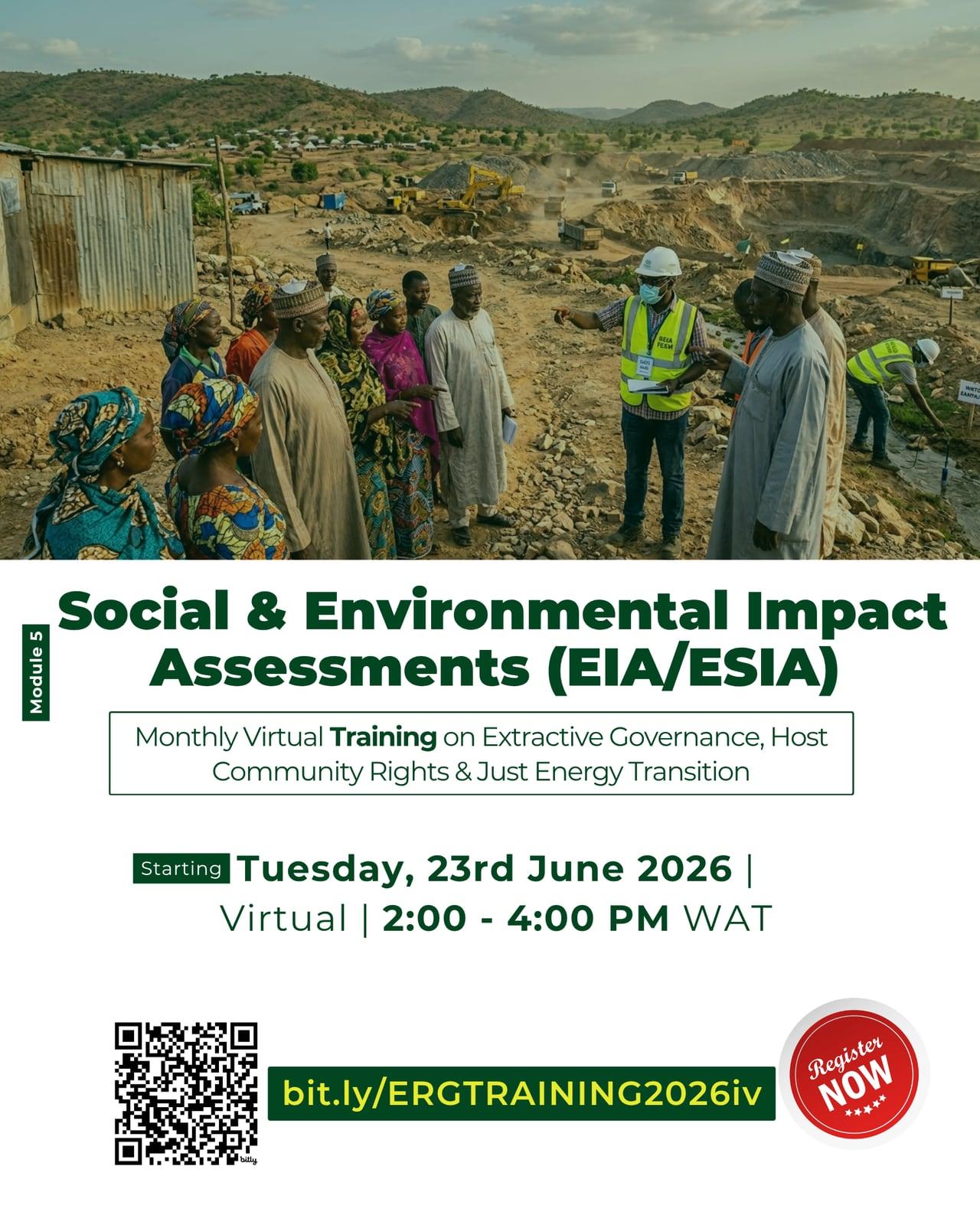
As part of our Protecting Mining Host Communities' Rights Learning Series, our June session will focus on understanding ESIAs and how communities can use these processes to protect their rights, environment, and livelihoods.
Join us to learn how informed communities can shape better decisions and hold project developers accountable.