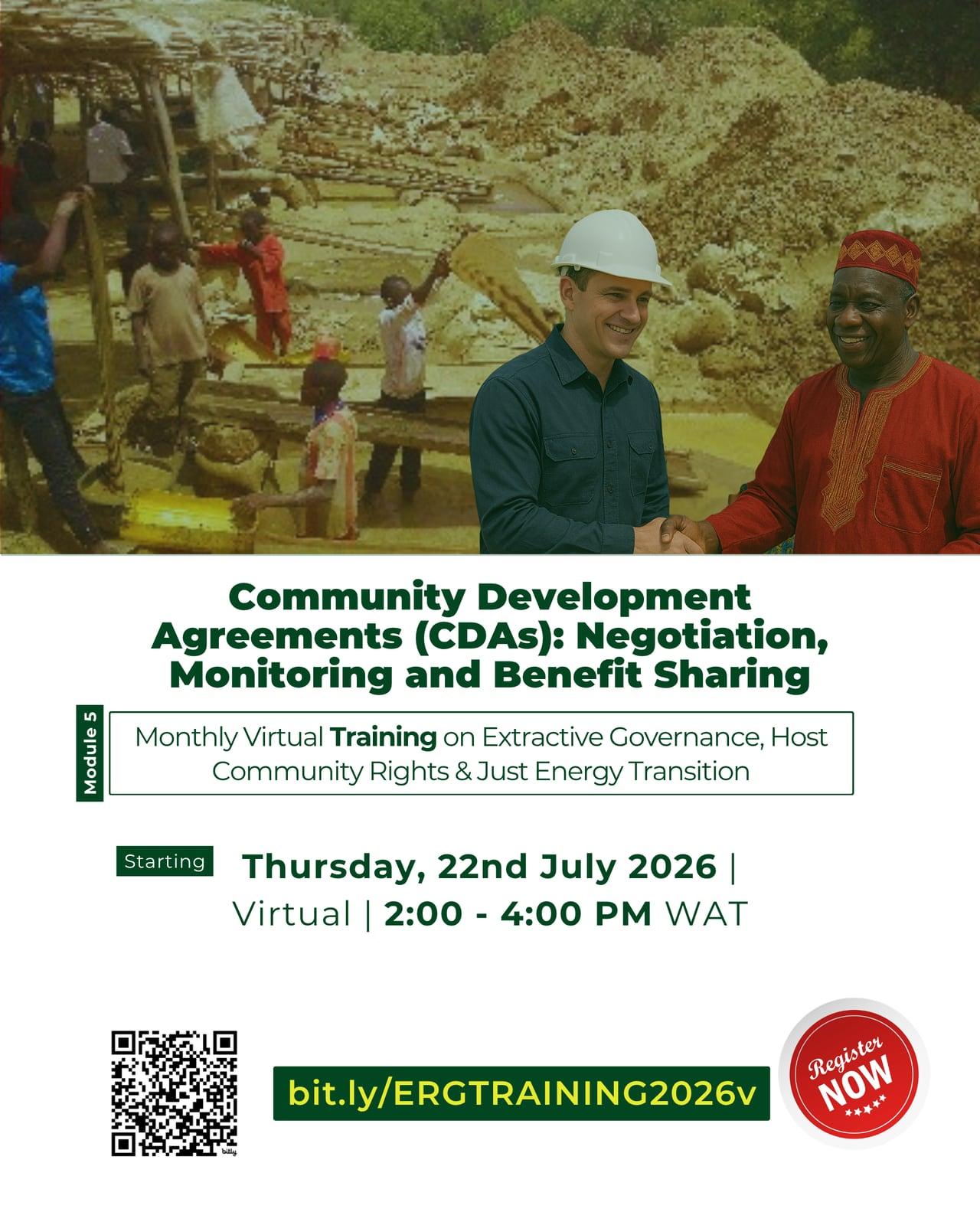
Community Development Agreements (CDAs): Negotiation, Monitoring and Benefit Sharing
July 22, 2026VirtualModule 6
In our last session, we examined Environmental and Social Impact Assessments - the process for predetermining how mining impacts the environment and the social structures of host communities and how plans are made to mitigate them before the project begins. This month, we turn to what happens next: how those identified impacts should inform what interventions the mining company should implement in the host community and become part of binding, enforceable commitments through a Community Development Agreement (CDA).
A mining plan that cannot show how it benefits the host community has failed a constitutional test, not just a moral one. Section 17(2)(d) of the Nigerian Constitution states that “exploitation of human or natural resources in any form whatsoever for reasons, other than the good of the community, shall be prevented.” A CDA is one of the ways this constitutional protection is enforced.
So, how do we determine if a CDA is adequate? For example, if it is determined that a project will cause serious environmental damage (polluting their source of water, degrading farmland, altering the topography) and cause local inflation due to the influx of migrant workers, and the mining company proposes one borehole and two classrooms as their community development plan? Would that be enough? Are CDAs the same as corporate social responsibility (CSR)?.
In this month’s session, we will consider issues such as:
- What counts as ‘an impacted community’ or ‘a host community?’
- Did the community consent to the mining project in the first place (Free, Prior, and Informed Consent (FPIC)), and if it didn't, can it still be called a Community Development Agreement (CDA)?
- Who negotiates on the community's behalf, and who are they accountable to?
- Is the agreement ever reviewed as the project's scope and impact change over time?
- What roles do the state and federal governments play in initiating, negotiating, monitoring, and enforcing CDAs?
- If a CDA isn’t working, what can community members do about it?
We will also learn how to negotiate a CDA that reflects real community priorities, how to monitor whether it's being effectively implemented, and how to hold all parties accountable.
Each session in this series builds on the last, creating a practical learning space for communities, advocates, students, journalists, and civil society actors working to advance equitable mining governance and protect host community rights.
Whether you have attended previous sessions or are joining for the first time, we invite you to be part of this important conversation.